



Chi tiết tin - Quang Tri Portal

The stature of the man who made history
He taught history in Hanoi when he was young and when becoming a great military man, he still had the thinking of a historian and contributed greatly to reviewing revolutionary history and revolutionary wars.
Just seeing the huge volume and high quality of what he wrote and what was written about him in the 20th century, during which he witnessed complete change in Vietnam’s history, one can confirm that he is a leading historian who deserves to receive the most honourable rewards on intellect.
In 1988, the General accepted the invitation to be the Honorary Chairman of Vietnam History Science Association and worked with an exemplary sense of responsibility.
We will never forget the time the General chaired a scientific workshop on the two historical figures of Phan Chu Trinh and Huynh Thuc Khang in Da Nang City in 1996. From the panel’s seat, he took a chair to sit near Nguyen Van Xuan, a teacher who had strong central-region accent of Quang, to listen to his comments. After the workshop ended, he still stayed to talk with officials to evaluate further the results of the workshop and gave comments on some of the comments that were not correct, in a workshop held at a time when the atmosphere was not so open.
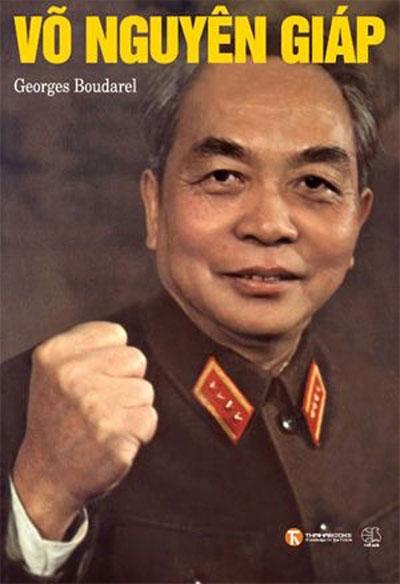
He was present at important meetings to commemorate famous men, including the generals under his leadership. His papers on Tran Hung Dao, Nguyen Trai, Phan Chu Trinh, Huynh Thuc Khang, To Hieu, Phan Thanh, Tran Huy Lieu, Nguyen Binh, Nguyen Chanh, Le Trong Tan, Hoang Van Thai, Vuong Thua Vu, and others, together make a very valuable documentary source.
Vo Nguyen Giap had a challenging life. He grew up among the intellectuals in a school of the former regime and learnt modern thinking to see the necessity of overthrowing colonialism to strive for the humane ideology of the time. This patriotism, therefore, did not only come from the love for an oppressed nation that wanted to change its destiny, but also from the awareness of the way to achieve that goal from social knowledge, especially from the national and human history lessons.
After his time working in the journalism field in the central region under the leadership of strong-willed scholars in the Duy Tan movement such as Phan Boi Chau and Huynh Thuc Khang, Vo Nguyen Giap became a history teacher in Hanoi. It was at this time that his first connection was established with Nguyen Ai Quoc, who was directing the revolutionary movement from overseas.
The man who discovered Vo Nguyen Giap’s ability and gave him the responsibilities to become an eminent military master was President Ho Chi Minh. By giving Vo (martial arts) the alias Van (literature), President Ho Chi Minh put forward a principle that creates the invincible strength for Vietnam’s revolution. That is to consider politics and the people’s power as the root. This can be proved in President Ho Chi Minh’s order to establish the Vietnam Propaganda Unit for National Liberation, the predecessor of the present Vietnam People’s Army. In the fights against the two major powers, Vo Nguyen Giap, as Commander-in-chief, and his comrades always grasped that ideology of Ho Chi Minh.
I was lucky to witness his two meetings with former US Secretary of Defence McNamara in Hanoi (in 1995 and 1997). Both times, the General had to answer the question of whether opportunities were missed to avoid a war. With his crystal arguments, the General confirmed that Vietnam was a minor country and sought every chance to make peace, a peace with honour, but if the country had to face a war, it would act as it had done.
In a meeting with the son of J. F. Kennedy in Hanoi in 1998, the General, aged 88 at the time, told a man 50 years his junior that most young Americans just knew that the war was fierce but did not know that the two countries used to be allies in the struggle against facism. The General also pointed his hand at a picture of President Ho Chi Minh and the US Deer Team as evidence. The guest was persuaded.
When he was nearly 100 years old, as Hanoi was about to celebrate its 1,000th anniversary of establishment, the General still had a burning desire for history. He discussed with the historian circle about how to protect the Thang Long Citadel and to gain UNESCO recognition for it. He still wondered why the present students were not interested in learning history.
The vitality of history burning in the heart of the man who contributed to the historical narrative of the country in the 20th century, and expectation to give it to the following generations, helped the history teacher become a renowned General in the history of the country and the world.
Source: PANO
- The world admires General Vo Nguyen Giap (09/10/2013)
- Warriors of the General (09/10/2013)
- General Vo Nguyen Giap in the memory of international friends (Part 2) (08/10/2013)
- Int’l public opinions: General Giap lives forever (08/10/2013)
- General Vo Nguyen Giap lives forever in the hearts of our people, army and international friends (08/10/2013)
- Cuban people keep General Giap’s image forever: Raul Castro (07/10/2013)
- Russian General remembers General Vo Nguyen Giap (07/10/2013)
- General Vo Nguyen Giap’s house full of memories (07/10/2013)
- General Vo Nguyen Giap in the heart of Latin Americans (07/10/2013)
- General Vo Nguyen Giap in the memory of international friends (Part 1) (07/10/2013)


