



Chi tiết tin - Quang Tri Portal

Vuc Quanh war museum
 |
Amid the rice paddies less than 10 km from the heart of the provincial town of Dong Hoi lies an old battlefield that a Hanoian man has turned into a tourist site.
The 10-hectare Vuc Quanh Tourist Park is a lively museum about the Vietnam War.
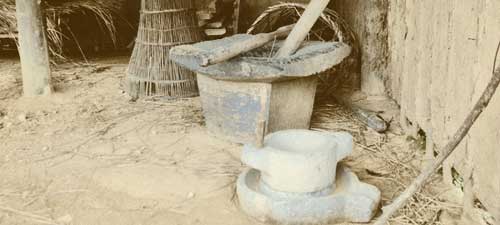 |
The park is located at a former camp of the National Front for the Liberation of South Vietnam’s Army Division 334, where many war-time relics still remain, such as a ferry, a pontoon bridge, shelters, trenches, a school, a health station and a nursery. All have been vividly restored by Nguyen Xuan Lien, the project director.
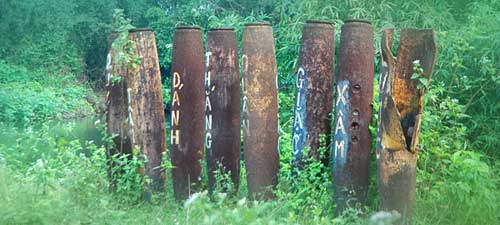
The grounds include deep bomb craters, a pontoon bridge made of gas barrels, thatch-roof houses typical to Quang Binh during the war years and even a path that once connected to the Ho Chi Minh Trail.
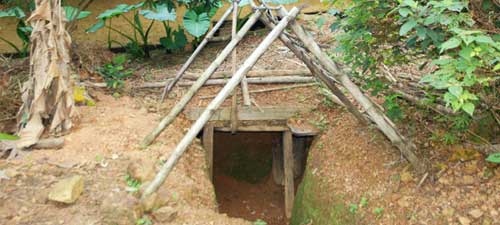 |
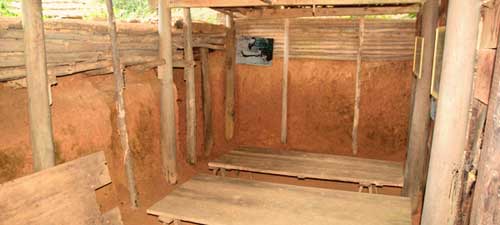
In addition, Vuc Quanh boasts a medical clinic with an underground operating room, a classroom, a nursery school, and shelters dug near local people’s homes. There’s also a restored half-burnt house, a house that was disassembled to serve as a bridge for vehicles and a warehouse formerly used for rice and salt. The system of roads and trenches around the village has also been restored.
 |
Walking around the site, visitors can see many objects of life during wartime such as oil lamps made of bomb shells. A camouflage bicycle, clusters of gas barrels and pieces of iron, used as makeshift magnetic bomb detectors on the river, can be found around the site. Co tau bay (Benth), a key vegetable for liberation soldiers during the war, is also available in the area.
The museum is free to visit.
Source: QuangBinh Tourism
- Chay River - Dark Cave (26/05/2011)
- Perfect gateway (07/12/2010)
- Quang Binh’s bird island (19/11/2010)
- Thien Duong (Paradise) Cave (05/09/2010)
- Nuoc Mooc Stream - new destination in Quang Binh (21/06/2010)
- Cha Lo - Heaven Gate (14/06/2010)
- Tam Co Cave (25/07/2009)
- Nuoc Mooc Spring Eco-trail (03/09/2008)
- Explore the National Park (04/08/2008)
- Phong Nha - Ke Bang World Natural Heritage (17/11/2007)


