



Chi tiết tin - Quang Tri Portal

When the 'steel island' turns to tourism - Part 1: The "green gem" in the middle of the ocean
In the middle of the central coast, Con Co Island, once known as the "steel island" during the war years, is facing a new journey: becoming a tourism and service center associated with its role as an outpost in the East Sea.
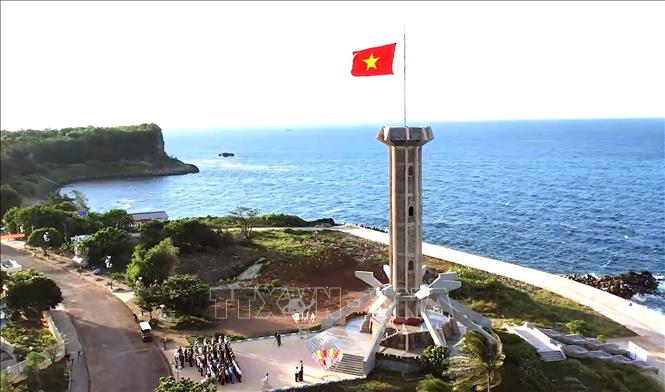
The flagpole on Con Co Island, a sacred symbol affirming national sovereignty, is the first stop for many tourists when they set foot on this strategically important island. Photo: Nguyen Linh/TTXVN
Behind the pristine beauty of its forest-sea ecosystem and its unique historical depth lie numerous "bottlenecks" that have hampered development over the years. How to awaken its potential, propel this strategically important island to new heights while preserving its original values, is a challenge facing the local authorities and managers. The Vietnam News Agency (VNA) presents a series of articles titled: When the "Steel Island" Develops Tourism, with the hope of offering suggestions for solving this problem.
Lesson 1: "The Green Gem" in the Middle of the Ocean
Unlike other well-known destinations, this small island quietly preserves unique layers of history: millennia-old basalt rock formations, pristine tropical forests, and an unforgotten wartime memory. All these elements blend together to create a "green gem" amidst the vast ocean – beautiful in its own way, captivating any visitor who comes here.
From "steel island" to a realm of memories in the middle of the sea
On a summer afternoon, the ship left Cua Viet port, cutting through the waves and heading out to sea. The central Vietnamese mainland gradually receded behind, giving way to the vast blue expanse of the ocean. After about an hour, a small blue dot gradually became visible on the horizon – that was Con Co Island.
Few could imagine that amidst this peaceful landscape, there once lay a fiercely contested battleground. Following the 1954 Geneva Accords, Con Co Island became a strategically important location, guarding the waters along the 17th parallel. On August 8, 1959, soldiers from the 270th Regiment landed on the island, planting the red flag with a yellow star, officially asserting sovereignty in the South China Sea. From that moment on, the island entered years of intense warfare.
Amidst the relentless bombing and shelling, in nearly 1,000 battles of varying sizes, the soldiers and civilians on the island shot down 48 enemy aircraft and sank 17 warships. Nearly 200 officers and soldiers sacrificed their lives to defend every inch of the island.
It's no coincidence that Con Co Island is called the "steel island." That title was forged from willpower, blood, and an unwavering belief: defending the island means defending the country. Today, as you walk along the small paths around the island, war memories aren't just in books; they're right before your eyes: trenches, artillery positions, and former battlegrounds nestled amidst the lush green of the tropical forest. No explanation is needed; the space itself tells its story.
Veterans like Mr. Tran Van Tha, the former commander of Con Co Island, still recount old stories with a calm voice whenever they return to the island: stories of sharing every drop of fresh water, nights sleeping in bunkers, and living amidst the stormy seas. The memories are not boisterous, but enduring, just like the island itself.
"A natural museum" in the middle of the ocean

The ancient Moi Well on Con Co Island, a natural source of fresh water in the middle of the ocean, is a favorite destination for many tourists exploring this strategically important island. Photo: Nguyen Linh/TTXVN
If history alone were to suffice, Con Co Island could be considered a "historical landmark." But what truly sets this island apart is its unique ecosystem – one that has quietly revived after the war. Just a few dozen meters from the water's edge, a dense, multi-layered tropical forest unfolds. Sunlight filters through the foliage, casting dappled patches of light on the ground. The space is both pristine and vibrant.
Mr. Tran Xuan Anh, Secretary of the Party Committee and Chairman of the People's Committee of Con Co Special Zone, led us on a tour around the island, explaining that about 70% of the island's area is natural forest. Despite being devastated by bombs and bullets, the forest has recovered almost completely. "It's not as massive as a great forest, but the forest here is dense and full of life," he said, pointing to large trees covered in vines, where the sounds of insects and birds blended together to create a symphony of forest and island.
According to Mr. Tran Xuan Anh, Con Co Island was formed from volcanic activity more than 40,000 years ago. Along the coastline are layered basalt rock terraces, some eroded by waves into strange shapes. Nghe Beach boasts the pristine beauty of volcanic rocks; Huong Giang Beach is soft with coral sand; while Da Den Beach in the northwest stands out with its round, smooth stones gleaming in the sun.
While the marine environment is diverse on land, a "different world" also exists underwater. According to Mr. Tran Xuan Canh, Deputy Director of the Con Co Island Marine Reserve Management Board, the reserve covers approximately 4,300 hectares and is home to 954 species of marine life, including over 260 species of fish and 137 species of coral. Among these are coral reefs considered to be among the best-developed in Vietnam. Along with this, aquatic resources such as lobsters, sea cucumbers, cuttlefish, groupers, snappers, butterflyfish, king oysters, etc., contribute to a vibrant marine ecosystem.
From a business perspective, Mr. Pham Hoang Phuong, Vice Chairman of the Quang Tri Tourism Association and Director of Ken Travel Company, believes that the unspoiled, uncommercialized beauty of Con Co Island is what creates its unique appeal. Besides relaxation, visitors come here to "connect with their roots" through the system of tunnels, underground passages, and the sovereignty flagpole.
According to Mr. Hoang Phuong, Con Co Island can be considered a rare "natural museum," where primeval forests and marine ecosystems coexist, almost intact. Unlike the hustle and bustle of Da Nang or Nha Trang, the island offers a sense of seclusion and tranquility – perfectly suited to the trend of experiential tourism and wellness retreats focused on "healing."
Mr. Dang Quoc Khanh, a tourist from Hanoi, shared a brief but vivid impression of Con Co Island: "The seawater is very clear; if you bend down, you can see fish swimming around the coral reefs, like a 'natural aquarium'."
Fisherman Nguyen Van Hai, who has been associated with the island for many years, put it more simply: "The sea here is clean, and there are still plenty of fish and squid!"
The island is "awakening"
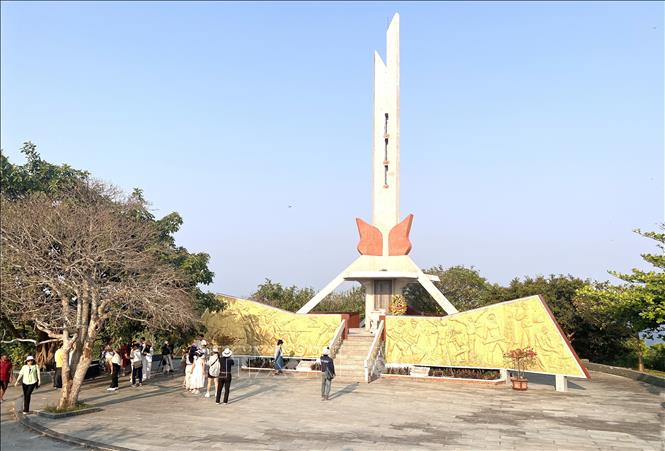
The Martyrs' Memorial on Con Co Island, commemorating the sacrifices of generations of officers and soldiers during the war years, is a meaningful stop that attracts tourists to visit and pay their respects. Photo: Nguyen Linh/TTXVN
As evening falls, small boats return after their fishing trips. The pier bustles with laughter and conversation. Life on the island unfolds slowly: no car horns, no traffic lights, no crowded streets. Only the sea breeze, the narrow paths, and the low-roofed houses nestled beneath the trees.
After many years as a military island, Con Co Island began to have residents living there from 2002; in 2004, the island district was officially established. The first people to come to the island brought not much material wealth, but a very clear belief: to start anew in a place that was once a battlefield.
The story of Nguyen Quang Thanh's family is a typical example. His father, Nguyen Van Tong, was a suicide soldier who supplied the island during the war. Nearly 40 years later, he chose to return to the island to start a new life with his wife, Ho Thi Duyen, and their young child. Although the bombings are over, it was still not an easy choice for them.
Small houses gradually sprang up amidst the forest. Hoa Phong Ba kindergarten echoed with the sounds of children. Mornings filled with the smoke of cooking fires, afternoons with fishing boats returning – these were simple signs of a community forming and developing.
Con Co Island today is no longer just a military island, but it's not yet a true tourist destination either. The island is in a transitional state: between pristine nature and development, between tranquility and anticipation.
In terms of location, the island is situated near Cua Tung and Cua Viet – famous beaches in Quang Tri province. If effectively connected, Con Co Island could certainly become a highlight in the local coastal tourism landscape.
Mr. Pham Hai Quynh, Director of the Asian Tourism Development Institute, commented: "There are places that need development to attract tourists, but there are also places that only need to be preserved as they are to be valuable. Con Co Island probably belongs to the second group. People come here not only to admire the sea, but also to listen to a story – the story of an island that has gone through war and is learning to embark on a new journey of development."
From the "steel island" of the past, Con Co is gradually becoming a "green island" of peace. A "gem" in the middle of the ocean - not suddenly bursting into light, but awakening in its own unique way, slowly but persistently. (To be continued)
Article 2: When the 'steel island' develops tourism: 'Opening the way' to the island
Source: https://www.vietnam.vn/
- Boats full of mackerel, fishermen earn millions of VND per trip (16/04/2026)
- Quang Tri finds 2 sets of remains of martyrs in Dakrong commune (13/04/2026)
- Two pangolins handed over to authorities in Quang Tri (16/04/2026)
- Phong Nha – Ke Bang: untapped biological treasure in Truong Son mountains (16/04/2026)
- Son Doong tourism gets global boost from CBS television programme (06/04/2026)
- Son Doong Cave airs a prime-time report on US television (06/04/2026)
- Accelerate the progress of building a multi-level boarding school in Quang Tri (07/04/2026)
- Quang Tri traffic police conduct general inspection of dump trucks, handling from registration to truck bed (07/04/2026)
- International Mine Awareness Day: Quang Tri advances “safe province” model (07/04/2026)
- Quang Tri seeks to unlock potential of marine tourism’s “golden triangle” (07/04/2026)


