



Chi tiết tin - Quang Tri Portal

Supervision results on implementation of DPPR in Quang Binh
 |
|
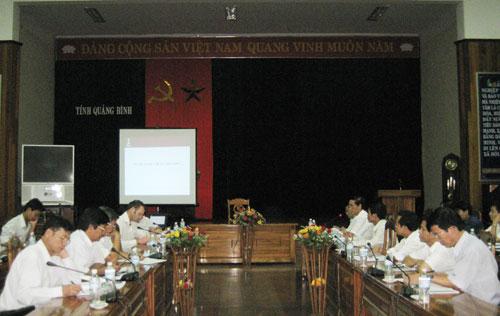
Working session with related departments and agencies to inform of supervision results on the implementation of DPPR project in the past time |
From May 02 to 13, the IFAD supervision mission inspected and accessed the implementation of the DPPR project in Quang Binh. It focused on reviewing the achievements to date in decentralisation of management of project physical activities; identifying the strengths and constraints and discuss opportunities for improved project performance; maintaining the efforts in poverty alleviation and food security for poor farmers and speeding up the market oriented approach by linking farmers with potential to markets; reinforcing the development of an orderly exit strategy in particular the handover of strategic assets and role of IAs scaling up post project.
As a result, after over four years of implementation, the Quang Binh DPPR project has achieved mostly 60 percent of targeted progress on the few stated indicators; poverty rates in the 48 project communes have steadily declined from 32 percent in 2005 to 16.1 percent in 2009; approximately 45.900 households have received programme funded services. At the project communes, the spontaneous adoption of successful production models by farmers, where improved income and food security has been clearly demonstrated; development of grassroots institutions, including farmer associations and Savings and Credit Groups; village level infrastructure through investment ownership decentralised to the commune. As of late 2009, 54 percent of total cucumlative project funds have been disbursed.
In the remaining 15 months, the Quang Binh DPPR project will carry out to revise DPPR policies for provision of subsidies for food security purposes strictly to very poor households; to re-orient market oriented capacity building strategies to farmers’ groups; to develop and provide practical small business management training; facilitate establishment of farmers’ groups to supply breeding livestock to other farmers and establish semi-intensive commercial farming operations on a collaboration basis...
Reported by Mai Anh - Translated by N.Y
- ECHO supports flood victims in Quang Binh (13/05/2010)
- Counselor of the Japanese Embassy had a working with Quang Binh People's Committee (12/05/2010)
- The Lawrence S. Ting Community Support Fund handed over wheelchairs to disabled people in Quang Binh (10/05/2010)
- The first private school in Quang Binh to be opened (09/05/2010)
- Rice to be given to Quang Binh province (08/05/2010)
- Quang Binh to host first sea and island festival (08/05/2010)
- Six central provinces provided by a rural water supply and sanitation project (07/05/2010)
- The number of visitors to Phong Nha increased sharply on April 30 and May 1 (06/05/2010)
- 310th anniversary of Nguyen Huu Canh's death (04/05/2010)
- Chau Hoa bridge open to technique (01/05/2010)


